Water-based cooling systems rely heavily on maintaining optimal cooling water quality.

Failure to maintain optimal quality can result in a number of costly operational disruptions:

  • Deposits and scaling in systems
    Scaling typically occurs when the dissolved salt content in the cooling water exceeds the threshold for remaining in solution. These deposits act as insulators, causing energy loss and potentially increasing corrosion rates.


  • Risk of corrosion
    As cooling water passes through the cooling tower, it is continuously oxygenated, which acts as a driver for metal corrosion. Additionally, the chemical composition of the cooling water significantly impacts the corrosion risk for the various metals present in the system.


  • Flow issues
    Due to the high intake of air by cooling systems, airborne impurities are constantly washed into the cooling water. Consequently, suspended solids can deposit within the system, causing flow restrictions and reduced performance in sensitive system components.
  • Microbiological growth
    Conditions in cooling systems are nearly tailored to promote microbiological growth. High concentrations of microorganisms can pose health risks to the surrounding environment, while also causing reduced flow rates, energy loss, and microbiologically influenced corrosion (MIC).


  • Lack of microbiological control
    Without regular monitoring, cooling systems can develop into a potential breeding ground for Legionella bacteria, which can be fatal for individuals with compromised immune systems. Due to the operating mechanism of cooling towers, infected cooling systems can spread bacteria over a very large geographical area.


It is therefore critical that the water in the cooling system maintains the correct quality.

Guldager

Guldager AdditiveCare – for cooling systems

Guldager AdditiveCare is a comprehensive water treatment solution for open and closed cooling systems.

This solution incorporates a wide range of additives specifically designed to resolve operational challenges in cooling circuits:

  • Corrosion inhibitors to protect the system's construction materials
  • Scale inhibitors to prevent water hardness salts from forming deposits in the system
  • Anti-fouling products that protect against flow problems caused by inorganic matter in the cooling water
  • Microbiocides for the control of microbiological growth, including Legionella bacteria
  • Biodispersants for combating biofilm

You will always begin with an initial, comprehensive review of your cooling system to map out all operational aspects and challenges – both technical and economic.

The technologies within the AdditiveCare program are combined with Guldager's extensive range of water treatment plants, dosing and control equipment, analysis and laboratory services, as well as our comprehensive service portfolio. This creates a total solution that ensures optimal operation of your cooling system without operational disruptions and with optimal operating economy.

It is a complete solution providing you with a single supplier for systems, equipment, additives, consultancy, and service.
In short: One-point-of-contact.
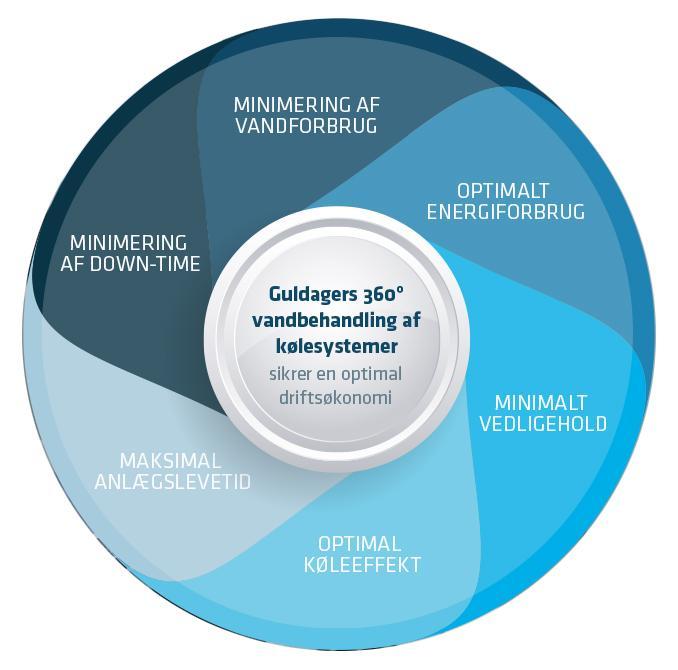
The benefits for you are numerous:

  • Minimization of water consumption
  • Optimal energy consumption
  • Minimal maintenance
  • Optimal cooling performance
  • Maximum asset value
  • Minimization of downtime

One-point-of-contact

Read more about your benefits of having Guldager as your one-point-of-contact supplier in connection with water treatment for cooling systems.

Learn more about how to get started with Guldager AdditiveCare – the efficient water treatment for cooling systems

Get started smoothly


Learn more about how to get started with Guldager AdditiveCare – the efficient water treatment for cooling systems.

Use our chat function here on the page or contact us at +45 48 13 44 00 if you have any questions or would like a visit from our consultants.

Our service center is also in contact with our service vehicles if you need system servicing or emergency assistance.